The multiple cash accounts (bank accounts) feature in Accounting by Guesty lets you:
- Set up multiple cash accounts and choose a default cash account.
- Associate properties with a specific cash account to automate a reservation’s payment association with the correct cash account.
- Group transactions in each cash sub-ledger. Prevent mixing transactions from different sub-ledgers into a single transaction.
- Reconcile each cash account separately.
- Run reporting specific to each cash account.
Set up multiple cash accounts
Important:
All unassigned listings, and newly added listings, will be automatically assigned to the default account.
Add cash account and assign properties
Step by step:
- Sign in to your Guesty account.
- In the side navigation menu, click
 Accounting to open the dropdown menu.
 - Under Cash management, select Cash accounts.
- At the top right, click Add cash account.
- Enter the account details:
- Bank name
- Routing number
- Account number
- Account type
-
Company ID (US only)
This is a 10-digit identifier for entities collecting payments or sending money via NACHA bank transfer files. Company ID may also be referred to as "originator".
- Click Proceed to assigning properties, or click Add cash account anyway to assign properties later.
- Select the relevant properties, then click Add cash account.
Repeat the above steps for additional accounts.
Edit a cash account
To edit a cash account, click  at the far right, then click Edit. Change the bank account details, or click Adjust listings to add or change listings assigned to the account.
Note:
If the three dots are not shown, this means you don't have the required user permissions to edit or archive cash accounts.
Archive a cash account
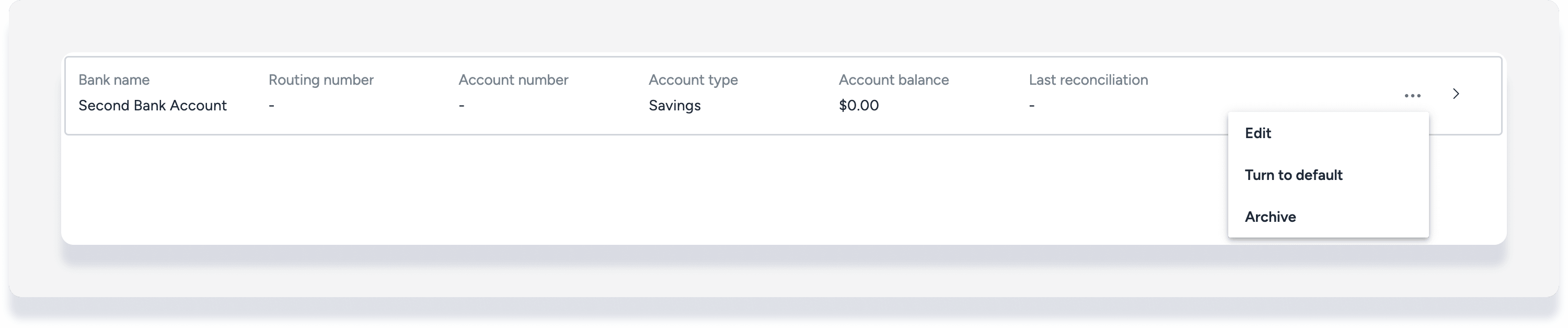
To archive a closed cash account, click at the far right, then click Archive.
An account can only be archived if the balance is 0, and it isn't the default account.
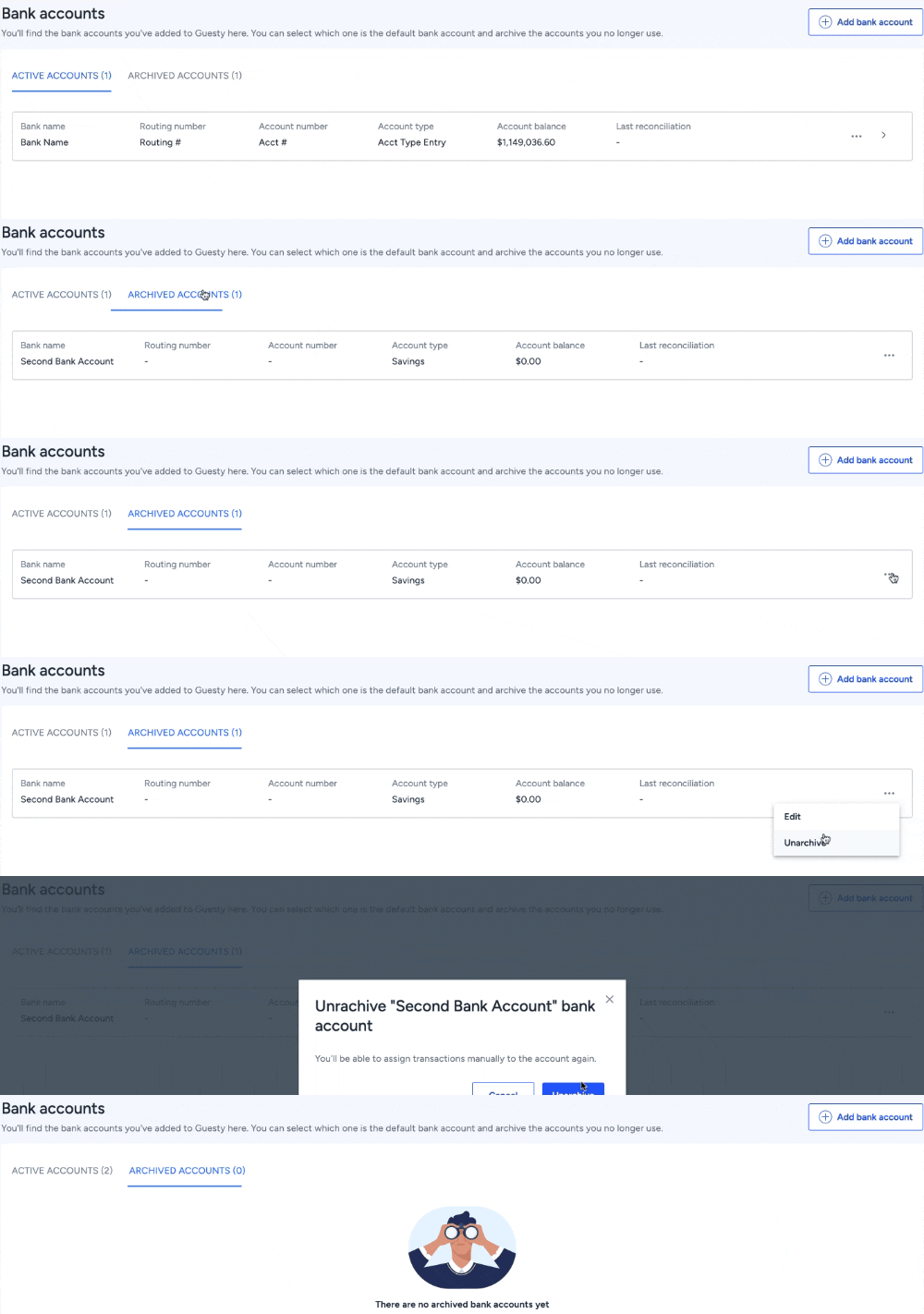
To unarchive an account, click the "Archived accounts" tab. Click at the far right, then click Unarchive.
Change default cash account
Your original cash account will be set as the default account. All transactions are associated with the default account (payments from guests or owners, disbursements, journal entries, etc) unless you assign listings to a specific bank account.
Important:
NACHA bank transfer files can only be generated from the default account.
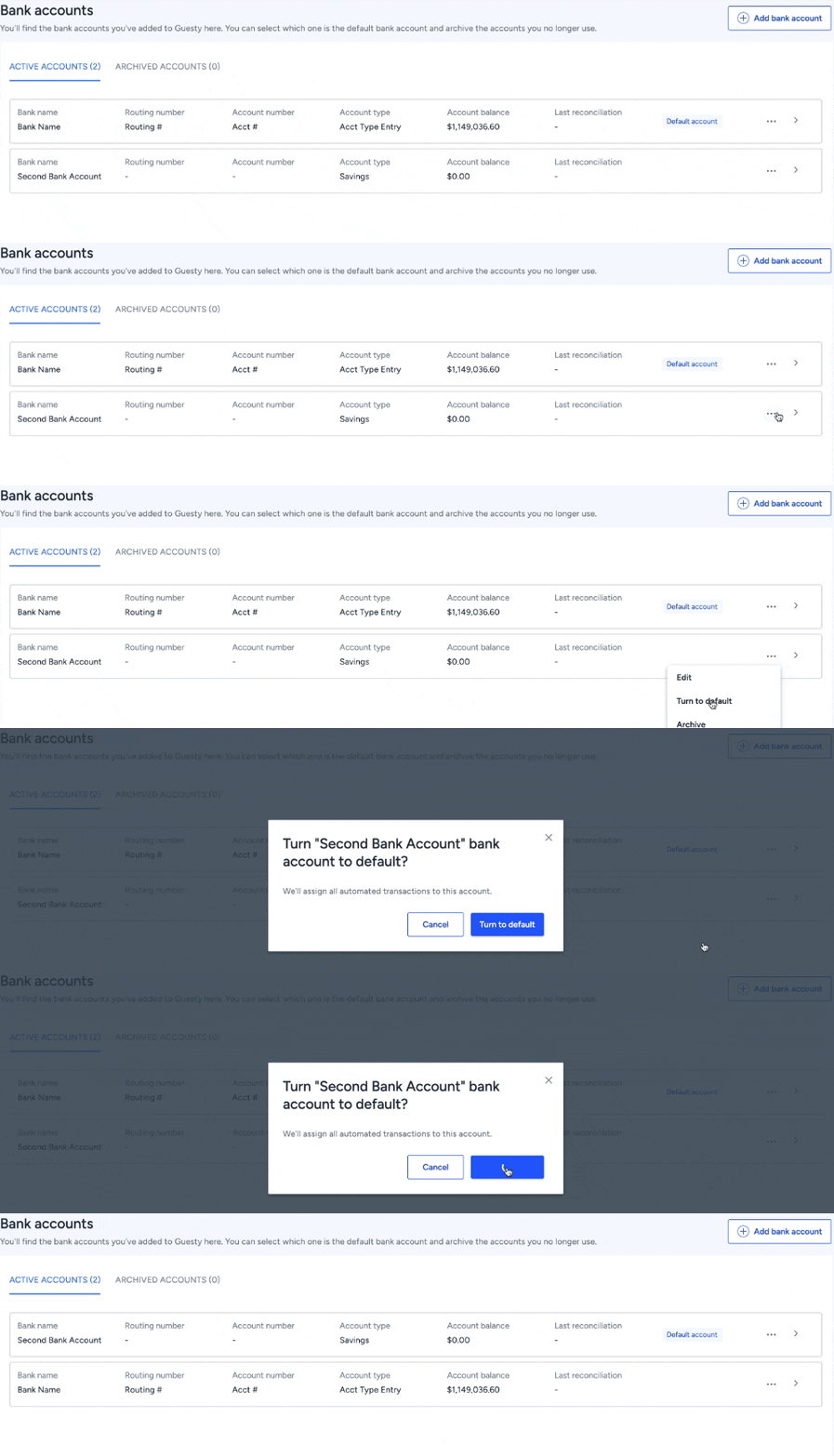
To change the default to one of the added accounts:
- To the right of the relevant account, click
- Click Turn to default.
- In the pop-up, click Turn to default.
Manage multiple cash accounts within Accounting
Once you have multiple accounts set up, you can assign payouts and transactions to your different accounts and run reports per account as follows.
View transactions per account in the check register.
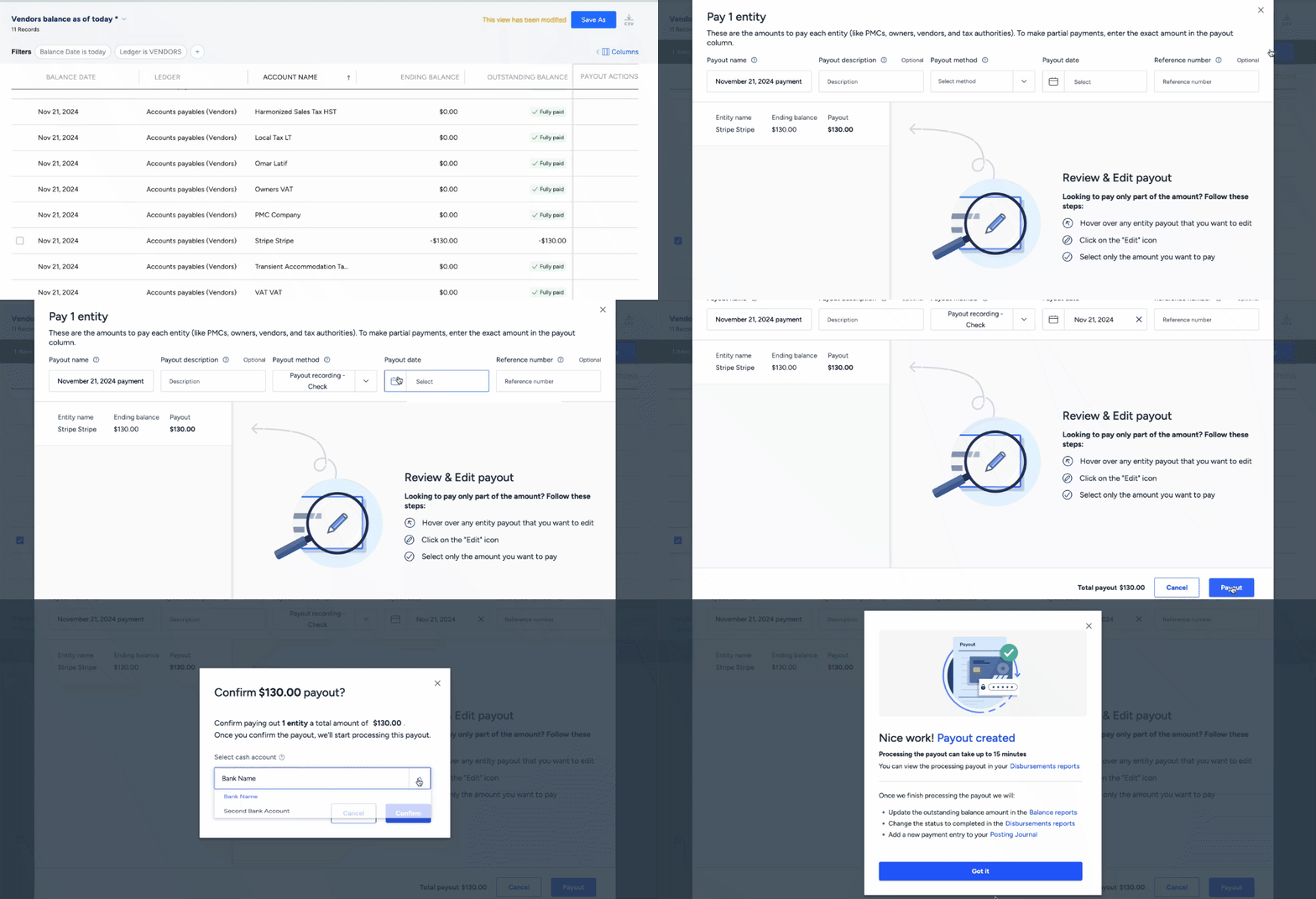
Record payouts
See full instructions for recording a payout . Once you've entered the payout details and clicked Payout, select the relevant cash account in the pop-up.
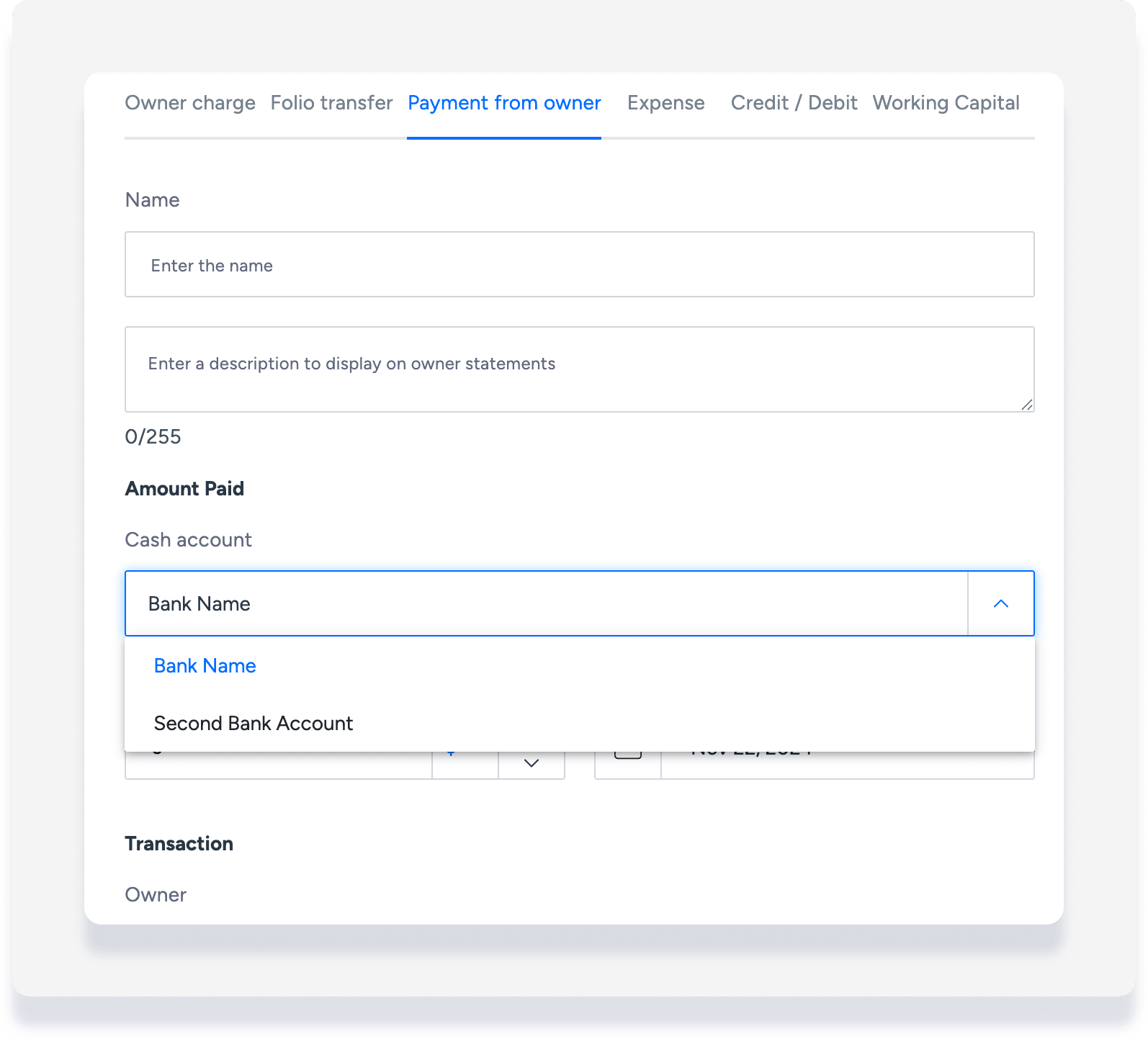
Add payment from owner
Transactions can be added through accounting reports, through the posting journal, or directly in a reservation.
When creating a payment from an owner, select the relevant cash account from the dropdown menu under "Cash account".
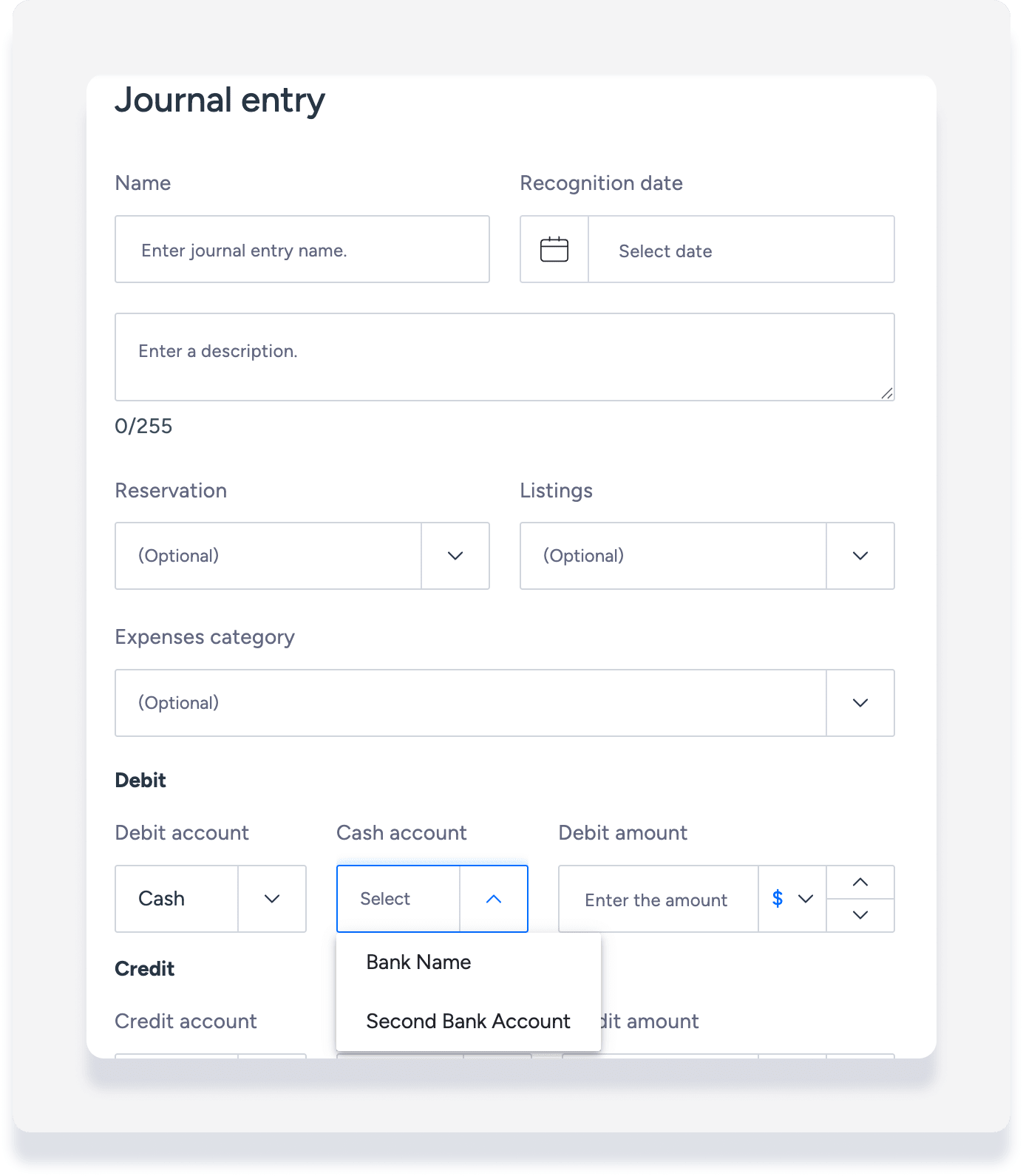
Add journal entry for cash
A journal entry can be added through accounting reports, through the posting journal, or directly in a reservation.
When creating a journal entry for cash debit or credit, select the relevant cash account from the dropdown menu under "Cash account".
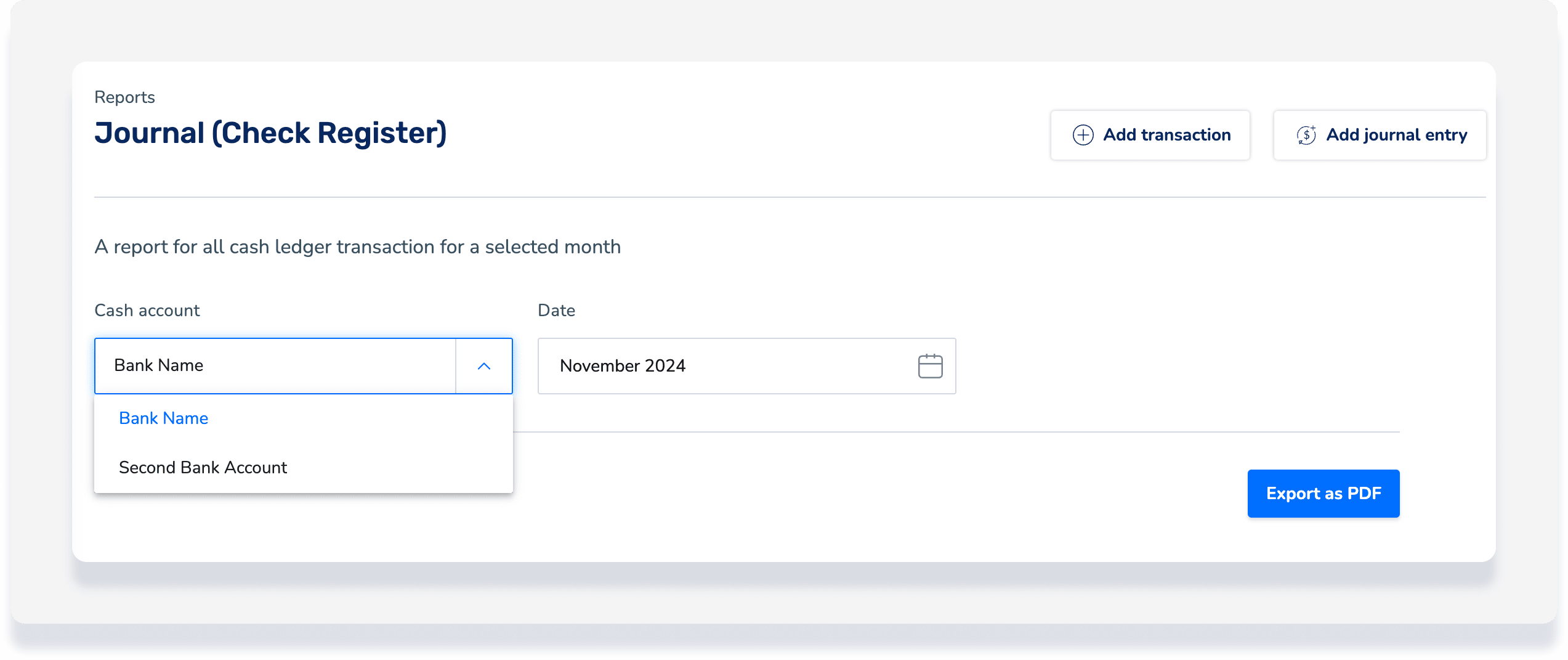
Run Accounting reports
For the Journal (Check Register) and Deposit Worksheet Accounting reports, select the relevant cash account from the dropdown under "Cash account".
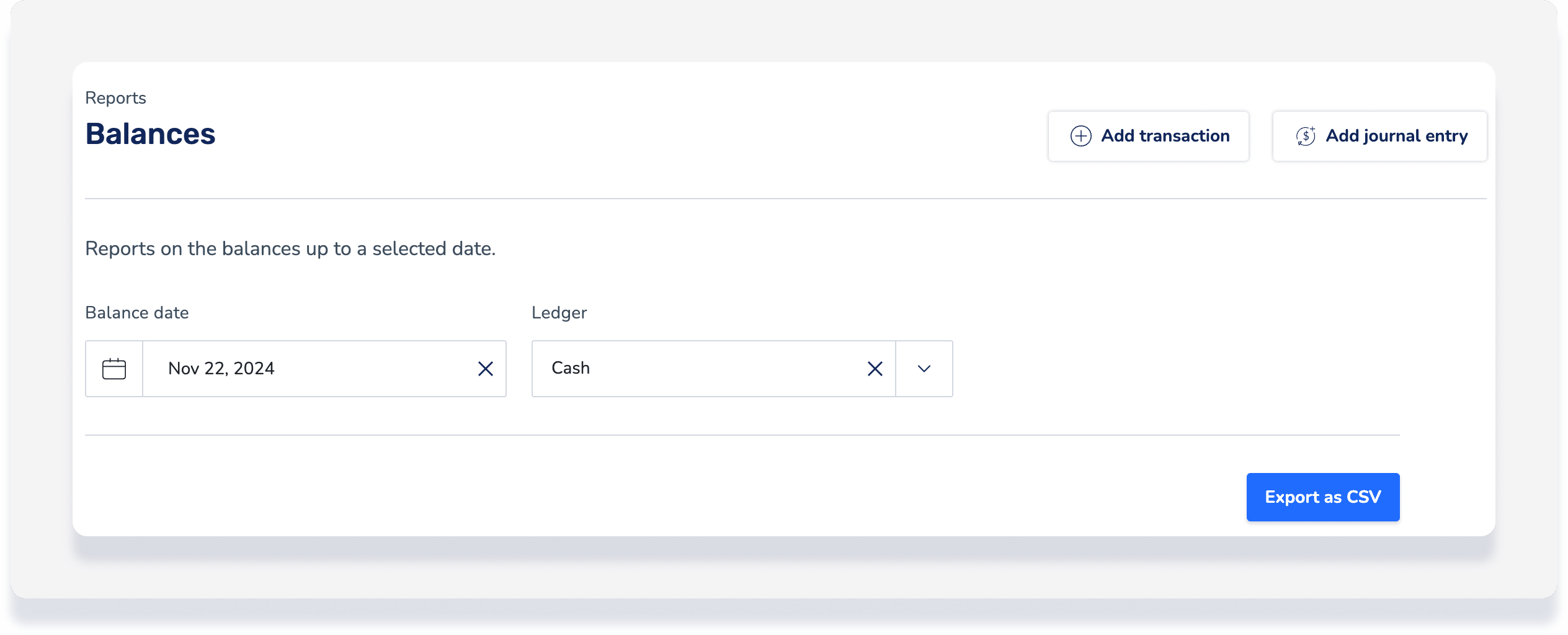
Note:
When running a "Balances report" for your cash ledger, the exported CSV displays the balance for each cash account separately.
Understanding the "account balance" column
The Account balance column displays the running total of all cash transactions—including guest payments, credit card transaction fees, disbursements, and journal entries—recorded within the cash ledger for each account. This amount is the sum of all posted debits and credits in your Guesty system. It represents the “book balance” of your funds in Guesty, which you should regularly reconcile against your actual bank statement to ensure accuracy.
