When you make a mid-stay relocation, the related accounting financials are impacted. The effects depend on whether you choose to use the original property rate or use the new property rate and change the total amount.
Like mid-stay relocations in the guest folio, you can view the accounting folio for the entire reservation or for a specific property. When you view the entire reservation, the "Property" column identifies line items per property.
Important:
Recurring owner charges and expenses are only created for original property. Add charges or expenses manually for the new property based on the specific needs of the relocation.
All fees are associated with the original listing.
Viewing financial data in the accounting folio
Click the dropdown to switch between folio views:
- Entire reservation
- Original property
- New property
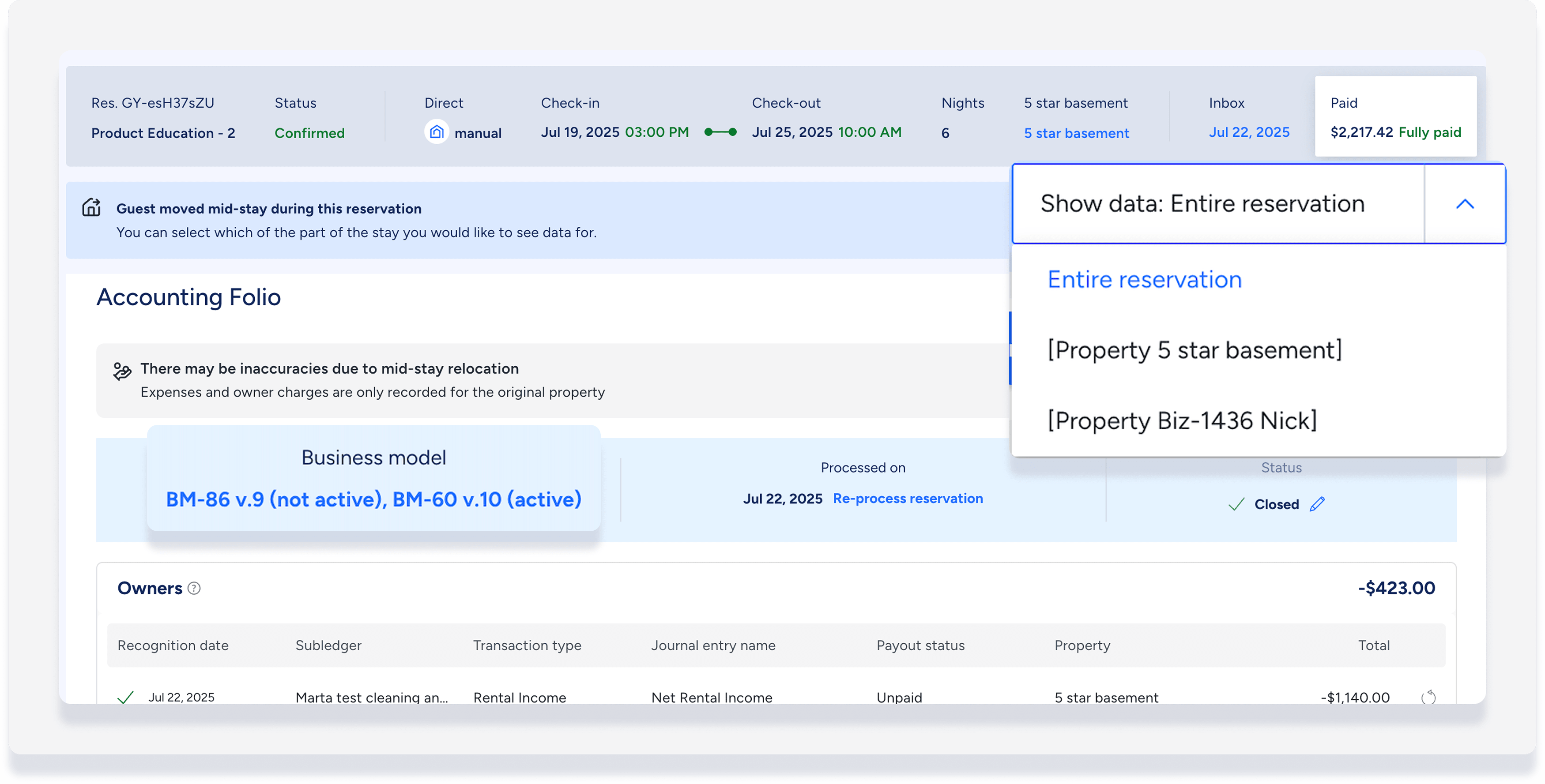
If the original and new properties are assigned to different business models, both business models are displayed and clickable from the accounting folio header as shown above.
Each business model applies to the dates the guest stayed at the related property. The check-in and check-out dates are based on the actual dates the guest stayed in each property, as explained below.
The owner revenue for each sub-reservation is calculated according to the related business model. The recognition dates in the accounting folio ledgers are based on when the guest checks in or out for each property.
For example: If the net rental income recognition is set to the check-in date, the date for the original property is the guest's check-in date, and the date for the mid-stay property is the relocation date.
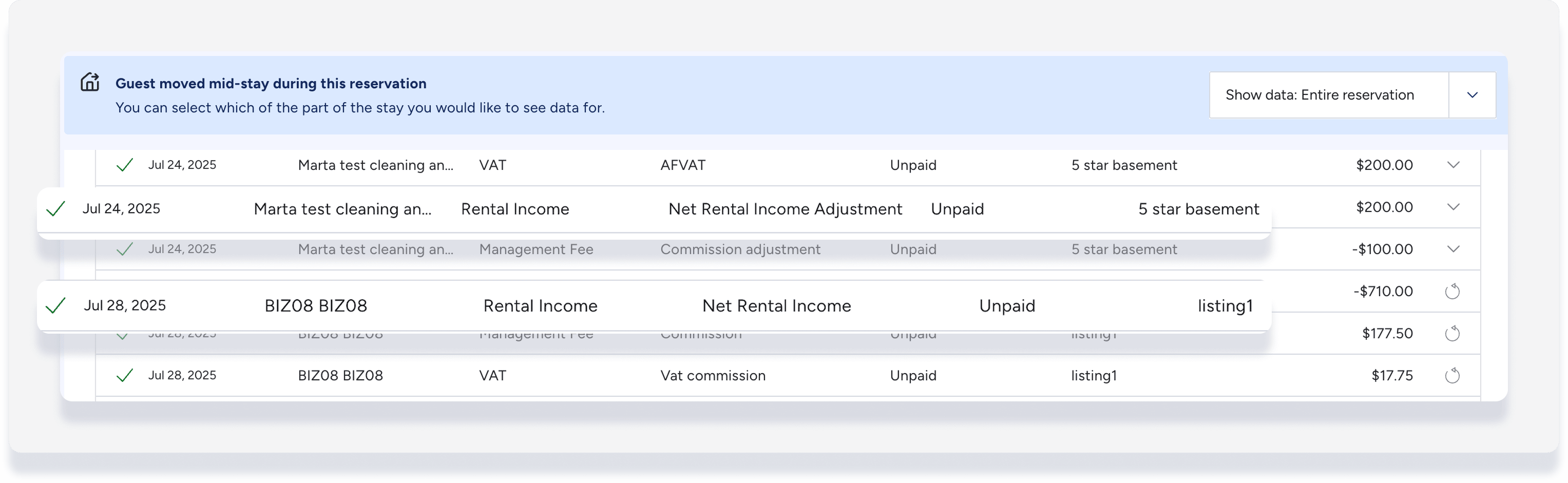
If you're viewing the entire reservation and not filtering by a specific listing, you'll see the related listing displayed for each journal entry.
In the payment ledger, payment is automatically assigned to the original reservation, regardless of the payment date.
The owner statement shows the corresponding owner revenue. The guest check-in and check-out dates are per the guest stay at that property.
For example: A reservation for June 1-15 at Listing A was moved to Listing B after 2 nights.
The owner statement for Listing A shows the reservation for June 1 to 3.The owner statement for Listing B shows the reservation for June 3 to 15. There is no indication on either statement that the reservation had a mid-stay relocation.
Reservations are automatically reprocessed and journal amounts changed when a mid-stay relocation is made.